
How to Generate More Leads from Meta Ads in 2026: A Simple, Proven Guide
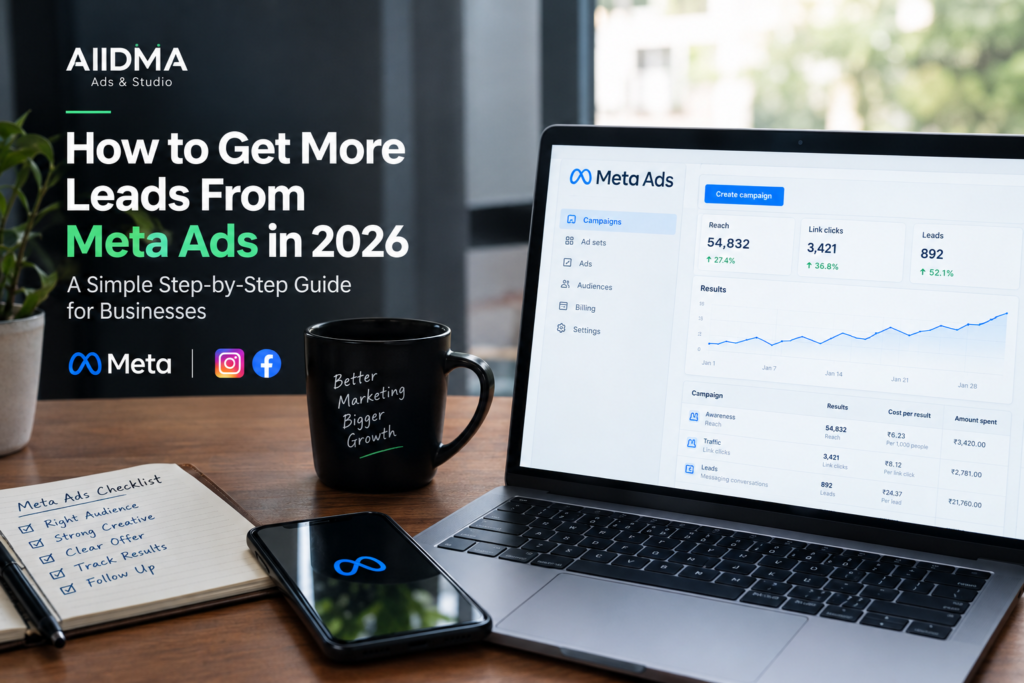
Running Meta Ads is easy.
Getting good quality leads consistently is the difficult part.
Meta Ads lead generation essentials
Many businesses start with a small budget, create a few ads for Meta Ads lead generation. They expect leads to come automatically.
Getting started
If you are a small business owner, local business, hotel, tour company, or service provider, this guide helps.
It explains Meta Ads lead generation and how to improve your ads step by step.
1. Start With a Clear Goal
Before creating a campaign, decide what you actually want.
For example:
- WhatsApp inquiries
- Phone calls
- Website leads
- Bookings
- Purchases
- Store visits
Don’t create a campaign just because you want “more reach.”
Your campaign objective should match your actual business goal.
WhatsApp conversation-focused strategy
For example, if your main goal is to get customers talking on WhatsApp, your strategy should focus on quality conversations. This aligns with Meta Ads lead generation rather than simply maximizing impressions.
2. Know Your Customer
One of the biggest mistakes businesses make is trying to target everyone.
Instead, answer these questions:
Who is my customer?
What problem are they trying to solve?
Why should they choose my business?
What makes my offer different?
For example, a hotel in Surat could target people searching for convenient stays around a specific location, while a tour company could focus on people interested in a particular destination or travel package.
The more clearly you understand the customer, the easier it becomes to create the right ad.
3. Your Creative Is More Important Than You Think
People don’t open Instagram or Facebook to see advertisements.
They open it for content.
So your ad needs to stop the scroll.
A simple creative structure is:
Hook → Problem → Solution → Offer → CTA
Example:
“Looking for a clean hotel near Kosad?”
Then show the room, location, facilities and offer.
Finish with a simple CTA:
“Message us on WhatsApp to check availability.”
Don’t try to put 10 different messages into one video.
One ad should communicate one clear idea.
4. Test Different Creatives
Don’t assume that your first creative will be your best creative.
Create 3–5 different versions.
You can test:
- Different hooks
- Different videos
- Different offers
- Different opening shots
- Different CTAs
- Customer-focused vs product-focused messaging
For example:
Creative A: Price-focused
Creative B: Problem-focused
Creative C: Experience-focused
After collecting enough data, compare the results.
Don’t judge an ad only by likes or comments.
Look at the metrics that actually matter to your business.
5. Watch the Right Metrics
Some important Meta Ads metrics are:
- CPM
- CTR
- CPC
- Cost per conversation
- Cost per lead
- Landing page views
- Conversion rate
- Qualified leads
- Sales
But there is one important point:
Cheap leads are not always good leads.
Imagine you generate 100 leads at ₹20 each.
That sounds great.
But if only 2 people are actually interested, your real problem isn’t the cost per lead.
Your problem is lead quality.
This is why businesses should track what happens after the lead is generated.
6. Send Quality Lead Data Back to Meta
This is an advanced step, but it can make a big difference.
Suppose Meta generates 100 leads.
Your sales team checks them and finds:
- 60 irrelevant
- 25 interested
- 10 highly interested
- 5 customers
Instead of treating every lead equally, you can send qualified customer information back to Meta using tools such as Conversions API (CAPI) and CRM integrations.
This helps create a better feedback loop:
Ad → Lead → Sales Team → Qualified Customer → Meta
Over time, this can help your advertising system learn what a valuable customer actually looks like.
7. Don’t Change Your Campaign Every Day
This is another common mistake.
Someone sees a high CPC today and immediately changes the campaign.
Then tomorrow they change the audience.
Then they change the creative.
After a few days, they don’t know what actually worked.
Give your campaigns enough data before making major changes.
Make changes based on patterns, not on a few hours of performance.
8. Your Follow-Up Matters
Getting the lead is only half the job.
Imagine someone sends a WhatsApp inquiry and receives a reply three hours later.
There is a good chance they have already contacted another business.
Try to make your follow-up:
Fast + Relevant + Human
Instead of:
“Hello sir, how can I help you?”
Try:
“Hi! Thanks for contacting us. Are you looking for a room for today or tomorrow?”
A specific question makes the conversation easier.
9. Track the Complete Customer Journey
Your dashboard shouldn’t only show:
₹ spent → leads generated
Try to track:
₹ spent → leads → qualified leads → sales → revenue
This gives you a much clearer picture of whether your advertising is actually working.
For example:
| Metric | Result |
|---|---|
| Ad Spend | ₹10,000 |
| Leads | 300 |
| Qualified Leads | 80 |
| Customers | 15 |
| Revenue | ₹75,000 |
Now you can start asking better questions.
Which creative generated the customers?
Which audience produced qualified leads?
Which offer converted better?
That’s where performance marketing becomes more than just “running ads.”
10. Keep Improving One Variable at a Time
You don’t need to completely rebuild your campaign every week.
Instead, test one important variable at a time.
For example:
Week 1: Test hooks
Week 2: Test creatives
Week 3: Test offers
Week 4: Improve lead qualification and follow-up
Small improvements can compound over time.
Final Thoughts
Meta Ads are not simply about pressing the “Boost” button.
A successful advertising system connects:
Creative + Audience + Offer + Tracking + Sales + Data
If you are a business owner in Surat or anywhere in India, start simple.
Get your tracking right.
Create better creatives.
Understand your customers.
Track qualified leads instead of only cheap leads.
And most importantly, use your actual sales data to improve your advertising.
At AIIDMA Ads & Studio, we focus on performance-driven digital marketing where the goal is not just to generate clicks, but to understand what happens after the click.
The goal is simple: better data, better decisions, and better business growth.